Home
HomeWhat do the
kidneys do?

The kidneys play a crucial role in the human body by filtering waste products and excess water from the blood, regulating blood pressure and maintaining electrolyte balance.
What do they look like?
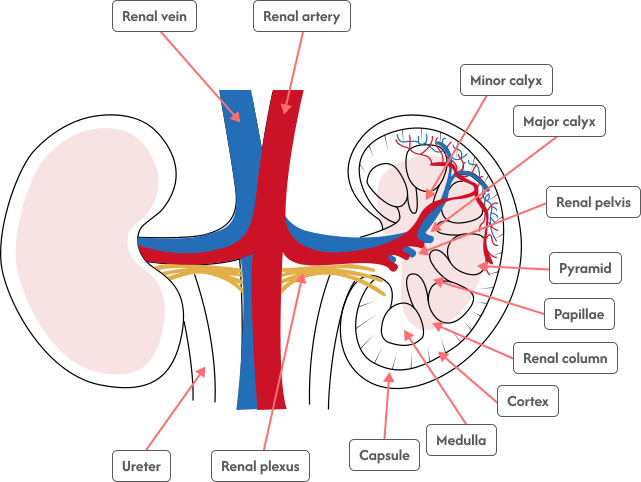
The kidneys are two bean-shaped organs located on either side of the spine in the lower part of the abdomen. They measure approximately 10 to 12 centimetres in length, 5 to 7 centimetres in width and 3 to 4 centimetres in thickness.19
Each kidney is made up of several layers:
- The cortex : the outer layer, where the nephrons (the functional units of the kidneys) are located.
- The renal medulla : the inner layer, made up of structures called renal pyramids.
- The calyces : the inner layer, made up of structures called renal pyramids.
- The renal pelvis : a larger cavity where urine from the calyces is collected before passing into the ureters.
The kidneys are also surrounded by a fibrous capsule and fatty tissue that protect them.
What are their functions?
Your kidneys play an essential role in removing waste products and toxins produced by your body after meals or physical activity. They continuously filter your blood through millions of nephrons, transforming excess fluids and waste into urine. This urine is then transported to the bladder before being naturally eliminated.19
In addition, the kidneys perform several vital functions within the body:
Fluid and electrolyte balance: They regulate the amount of water and minerals (such as sodium and potassium) in the body.
Hormone production :
- They release hormones (through the renin–angiotensin system) that help regulate blood pressure by controlling blood volume.
- They contribute to the production of erythropoietin (EPO), which stimulates red blood cell production, and activate vitamin D, which is essential for maintaining healthy bones.
Calcium and phosphate metabolism : The kidneys regulate the reabsorption and excretion of these two substances. An increase in phosphate levels can lead to a decrease in calcium levels, and vice versa. The kidneys help maintain this delicate balance.
When the kidneys are damaged, they are no longer able to fully perform these functions, which can lead to many health consequences.